If you've started reading about stress and quickly found yourself lost in jargon — the sympathetic nervous system, vagal tone, HRV, the rest-and-digest response — this guide is the starting point. It ties together the biological basics that underpin everything else on this site, without requiring a background in physiology.

The Autonomic Nervous System: The Two Branches Doing Most of the Work
Your autonomic nervous system (ANS) controls body functions that happen automatically without conscious input — heart rate, breathing depth, digestion, hormone release, and much more. It has two main branches that work in opposition, and both are necessary for health:
The sympathetic nervous system drives what's commonly called the "fight or flight" response. When you perceive a threat — or your body interprets something as a threat, including work stress, deadline pressure, or social anxiety — the sympathetic system activates: heart rate rises, blood is redirected to muscles, digestion slows, cortisol and adrenaline are released, and the body shifts into an alert, high-energy state. This response is adaptive and necessary for short-term challenges.
The parasympathetic nervous system drives the opposing "rest and digest" state — the condition the body needs for recovery, digestion, immune function, reproductive health, and sleep. Heart rate slows, digestive function resumes, inflammatory responses are modulated, and the body shifts toward repair and maintenance.
The problem with modern chronic stress is not that the sympathetic system activates — that's normal — but that it stays elevated without adequate recovery time in the parasympathetic state. Over sustained periods, this produces measurable downstream effects across multiple body systems.
The Vagus Nerve: The Primary Parasympathetic Pathway
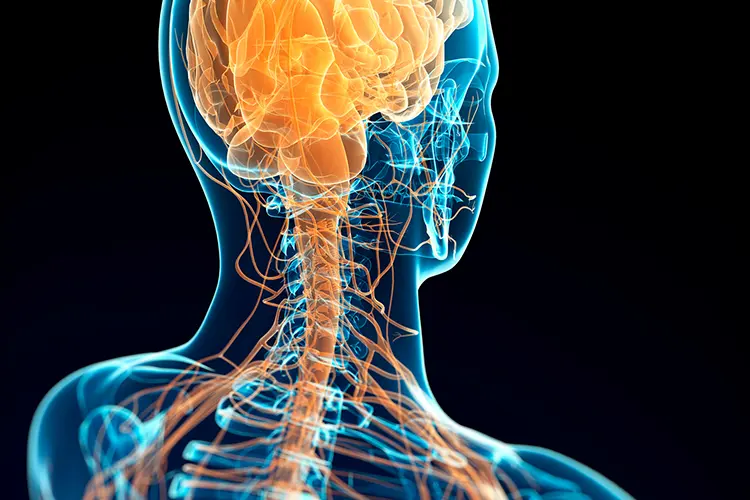
The vagus nerve — the tenth cranial nerve, sometimes called the "wandering nerve" for its long path from the brainstem to the abdomen — is the primary outflow pathway of the parasympathetic nervous system. When the vagus nerve is active, it releases acetylcholine at target organs: slowing the heart, supporting digestion, modulating inflammation, and actively braking the sympathetic stress response.
This is why the vagus nerve has attracted so much attention in the stress-and-wellness space. If you can reliably increase vagal activity, you can shift the body toward parasympathetic dominance — which is precisely what both free methods (slow breathing, cold facial exposure) and consumer devices (taVNS wearables) aim to do, through different mechanisms. The evidence for different approaches is covered in our dedicated vagus nerve guide and our guide to free vagus nerve stimulation methods.
Cortisol: The Stress Hormone and Its Circadian Role
Cortisol is often framed simply as the "stress hormone," but it's more accurate to describe it as a hormone with both a normal, healthy circadian rhythm and a stress-responsive role that becomes problematic when chronically elevated.
In a healthy pattern, cortisol rises sharply in the first hour after waking (the Cortisol Awakening Response), providing the alerting and energising signal to start the day, then declines gradually through the afternoon and reaches low levels in the evening to allow sleep to begin. Chronic stress disrupts this rhythm — typically producing elevated evening cortisol, which interferes directly with sleep onset and quality, and blunted morning cortisol, which impairs the sense of morning alertness and energy.
This is one of the clearest physical mechanisms by which chronic stress impairs sleep — and why improving stress management and improving sleep are often the same intervention rather than two separate ones.
Chronic Stress and Physical Symptoms: Why This Isn't Just "In Your Head"
People dealing with chronic stress are sometimes told, implicitly or explicitly, that their symptoms are primarily psychological. The physiology tells a different story. Sustained sympathetic activation and elevated cortisol produce documented downstream effects on:
Sleep: as described above, through cortisol timing disruption and elevated sympathetic tone in the evening hours when the body needs to downregulate for sleep.
Cognition: chronic stress affects the hippocampus and prefrontal cortex — the brain regions most involved in memory, word retrieval, and executive function. This is a well-documented contributor to the symptom described as brain fog. See our brain fog guide for a full diagnostic breakdown.
Digestion: sympathetic dominance suppresses digestive function directly, partly through the same vagal pathways — when vagal tone is low, the gastric and intestinal movements that digestion requires are impaired.
Immune function: the cholinergic anti-inflammatory pathway, in which vagal activity suppresses pro-inflammatory cytokine production, is reduced under chronic sympathetic dominance.
Heart Rate Variability (HRV): What It Actually Measures
HRV — the variation in time between consecutive heartbeats — has become the most accessible proxy measure for autonomic balance and vagal tone that consumer technology can track. Higher HRV indicates better parasympathetic flexibility; lower HRV suggests sympathetic dominance or impaired recovery capacity.
HRV is a useful, legitimate signal — but it's important to understand what it is and what it isn't. It is not a direct measure of how stressed you feel, how well you're sleeping at a symptom level, or how your cognition is performing. It's a physiological proxy for one component of nervous system balance, influenced by many factors including fitness, recent alcohol consumption, hydration, illness, sleep debt, and breathing rate at the time of measurement.
Consumer wearables track it with varying accuracy (covered in our smartwatch accuracy guide), and it's most useful as a trend indicator over time rather than a precise daily diagnostic. With those caveats, it's one of the more accessible windows into whether the nervous system is in recovery or still running hot.
Frequently Asked Questions
The sympathetic system drives "fight or flight" — heart rate up, alert, energy redirected to muscles. The parasympathetic system, with the vagus nerve as its primary pathway, drives "rest and digest" — recovery, digestion, immune support. Chronic stress keeps the sympathetic system elevated without adequate parasympathetic recovery time.
Yes — this is well-documented. Sustained sympathetic activation produces downstream effects on sleep, digestion, immune function, and cortisol regulation that result in real physical symptoms, not just a subjective sense of being stressed.
No — stress is one common contributor, but poor sleep, nutritional deficiencies, hormonal changes (including menopause), and underlying medical conditions can cause similar symptoms. Our brain fog guide works through how to distinguish between them.
Heart rate variability (HRV) is the variation in time between consecutive heartbeats. It's used as a proxy for vagal tone and parasympathetic function — higher HRV generally indicates better autonomic flexibility and recovery capacity. Consumer wearables track it with varying accuracy, and it's most useful as a trend indicator over time rather than a precise daily measure.
LessStress.ie
LessStress.ie covers neuro-tech devices, sleep science and brain health for an Irish audience, with every product claim checked against the real peer-reviewed evidence before it gets a recommendation.
Related Articles

Sources & Further Reading
- Chrousos, G.P. (2009). Stress and disorders of the stress system. Nature Reviews Endocrinology, 5(7), 374–381. View on PubMed ↗
- Task Force of the European Society of Cardiology and the North American Society of Pacing and Electrophysiology. (1996). Heart rate variability: standards of measurement, physiological interpretation and clinical use. Circulation, 93(5), 1043–1065. View on PubMed ↗
- Berthoud, H.R. & Neuhuber, W.L. (2000). Functional and chemical anatomy of the afferent vagal system. Autonomic Neuroscience, 85, 1–17. View on PubMed ↗