Before spending money on a taVNS device, it's worth knowing that several free, low-effort techniques have real — if often modest — research support for influencing vagal activity. Here's what the evidence actually shows, and where the claims get ahead of the science.

Slow Breathing: The Method With the Strongest Evidence Base
Slow, diaphragmatic breathing — particularly techniques that lengthen the exhale relative to the inhale — has the most consistent supporting evidence among free vagal stimulation methods. During exhalation, vagal outflow to the heart is restored and heart rate slows; extending the exhale prolongs this parasympathetic window.
A 2022 meta-analysis of voluntary slow breathing studies found consistent increases in parasympathetic activity across studies, particularly in high-frequency heart rate variability, a primary marker of cardiac vagal tone. The effects were present both during slow-breathing practice and immediately after. The same analysis found that studies emphasising longer exhalations produced particularly clear results.
Common formats include box breathing (equal counts for inhale, hold, exhale, hold — typically 4 seconds each) and extended-exhale patterns such as a 4-second inhale followed by a 6–8 second exhale. The research is more consistent for slow breathing than for any other free method, though it's worth noting that most studies measure short-term physiological markers rather than longer-term outcomes like reduced clinical anxiety. For more context on how this fits within the broader autonomic picture, see our beginner's guide to stress and the nervous system.
Cold Water Facial Exposure: What the Dive Reflex Research Actually Shows
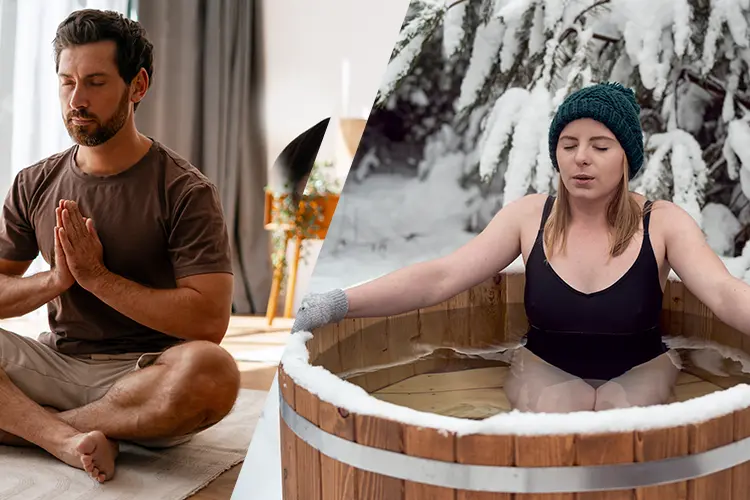
Cold exposure to the face triggers what's known as the mammalian dive reflex — a survival response present in all air-breathing vertebrates that causes rapid bradycardia (slowing of the heart rate), vasoconstriction in the limbs, and redistribution of blood toward the brain and vital organs. The reflex is mediated through the trigeminal-vagal reflex arc: cold receptors in the face stimulate the trigeminal nerve, which then activates the vagus nerve and produces a parasympathetic response.
A 2022 study published in Scientific Reports found that cold facial stimulation via the Cold Face Test significantly reduced acute psychosocial stress responses, including lower cortisol output, compared to control conditions in 28 healthy participants. The mechanism — facial cold triggering parasympathetic activation via the vagus — is well-established in the autonomic literature and is also used clinically to terminate certain cardiac arrhythmias.
The practical point worth emphasising: most of the specific research uses brief, targeted cold application to the face, not full cold showers or ice baths. Splashing cold water on the forehead and around the eyes, or applying a cold compress briefly to the face, reflects the conditions most studied. Full-body cold immersion hasn't been specifically validated for vagal stimulation in the same way, though it produces its own separate physiological effects.
Humming, Chanting and Vocal Stimulation: Plausible but Preliminary
Humming, chanting, and sustained vocalisation are theorised to stimulate the vagus nerve through a combination of its proximity to the laryngeal muscles and the extended exhalation these activities naturally involve. The slow exhale component likely overlaps with the breathing mechanism described above; the additional vocal vibration effect on vagal tone specifically is harder to isolate.
The evidence here is genuinely preliminary. Most supporting references consist of small, single-session studies measuring short-term HRV or subjective relaxation, rather than longer-term or blinded trials. It is a low-cost, low-risk practice and there is a plausible biological rationale, but it shouldn't be presented as an established intervention on the strength of the current literature. The honest position is: worth trying, not yet proven.
What These Methods Can and Can't Do
None of the free methods reviewed here have demonstrated sustained, durable changes in resting vagal tone in well-controlled, larger trials when used as standalone practices. They are best understood as tools for shifting physiological state in the moment — moving the body toward a parasympathetic-dominant condition during and immediately after practice — rather than as permanent fixes for chronic stress or anxiety.
For someone dealing with ongoing, significant stress or a diagnosed anxiety disorder, these methods are reasonable complementary tools, not replacements for professional care. For context on where electrical taVNS devices sit relative to these approaches, see our guide to whether vagus nerve stimulation actually works for anxiety and stress.
Frequently Asked Questions
Slow, extended-exhale breathing currently has the most consistent evidence base, with meta-analyses showing measurable increases in parasympathetic activity during and after practice. Cold facial exposure has good mechanistic support but less long-term outcome evidence.
No. The dive reflex research uses cold but not extreme temperatures applied briefly to the face. Full ice baths have not been specifically validated for vagal stimulation in the same way facial cold exposure has.
Yes, and many people do — for example, finishing a cold facial splash with a few minutes of slow exhale breathing. There is no published evidence on whether combining methods produces an additive effect, so any combined benefit remains speculative.
They work through different mechanisms. Free methods produce indirect, variable effects on vagal tone. taVNS devices deliver more standardised stimulation. Whether one produces meaningfully better real-world outcomes has not been established in direct comparative studies.
LessStress.ie
LessStress.ie covers neuro-tech devices, sleep science and brain health for an Irish audience, with every product claim checked against the real peer-reviewed evidence before it gets a recommendation.
Related Articles

Sources & Further Reading
- Sevoz-Couche, C. & Laborde, S. (2022). Effects of voluntary slow breathing on heart rate and heart rate variability: A systematic review and a meta-analysis. Neuroscience & Biobehavioral Reviews, 138, 104711. View Study ↗
- Eckhart, A., Lutz, J., Faust, T., et al. (2022). Vagus activation by Cold Face Test reduces acute psychosocial stress responses. Scientific Reports, 12, 19270. View Study ↗
- StatPearls. (2022). Physiology, Diving Reflex. NCBI Bookshelf, NBK538245. View on NCBI ↗